

When it comes to the revolving door of global crises, few are more perplexing to the public than what just took place in the Strait of Hormuz.
Oil has now fallen back below $70 a barrel, marking the apparent end of the price shock and a supposed return to normal. The Wall Street Journal called it “a stunning round trip” for oil prices.
But these days, “normal” usually means the damage has simply moved somewhere else.
So the question is not merely what happened. The question is what comes next. Was this all one big stage show? A financial smash and grab? A distraction from something else? Part of the controlled demolition of food and energy?
At this point, the answer could easily be all of the above.
The Strait of Hormuz is not some minor regional chokepoint. It is one of the most important energy arteries on earth. A huge share of the world’s oil and LNG moves through it, but that is only the obvious part.
What very few people took notice of is that Hormuz is also critical for fertilizer, sulphur, ammonia, urea, petrochemicals, base oils, industrial chemicals, and the hidden inputs that keep farming, shipping, trucking, manufacturing, and heavy industry moving.
In other words, this was never just about oil. It was about bottlenecks. That is why the official “crisis over” narrative is wrong. Yes, oil has fallen back to pre-crisis levels. Yes, traders have moved on. Yes, the headlines have changed. But the real economy must now deal with the consequences.
And you don’t have to be a market analyst or industry expert to see this. Farmers have been sounding the alarm all Spring.

You do not need the system to stop completely to create a food problem. You only need fertilizer to become scarce, expensive, delayed, or unavailable at a key point in the planting cycle. Then farmers cut application rates.
This has now happened.
The consequences come later this year: lower yields, tighter supply, and much higher food prices. By the time the public notices, the damage has already been done. In this instance, that is not a metaphor. Three months of disruption in the Strait has wounded the global economy.
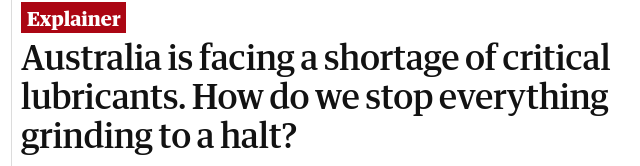
Meanwhile, the same story is unfolding in lubricants. Axios reported that “actual shortages are starting to appear” in some synthetic oil products, with refinery outages and Hormuz shipping disruptions tightening supplies of Group III base oils. These are key ingredients in modern synthetic motor oils used in newer vehicles, machinery, trucking, industrial equipment, and manufacturing.
Again, this is not some obscure corner of the economy.
It is the grease inside the machine.
While all this is happening, gold has also been smashed lower. And that makes sense if you understand the message they are trying to manufacture: crisis over, oil down, gold down, inflation beaten. But the real economy is telling us something very different.
Bottlenecks. Shortages. Falling demand. Broken supply chains. Rising costs buried beneath falling prices. In other words, not recovery, but the onset of the real crisis.
Worldwide Recession.
Manufacturing jobs in the US are falling at their fastest rate since the beginning of the Covid-19 pandemic, amid lingering concerns over the impact of the Iran war on American industry. According to S&P Global’s US Flash Purchasing Managers’ Index, which surveys senior executives at manufacturing companies, employment in the sector is estimated to have fallen in June at the fastest monthly rate since May 2020, when large swaths of US industry were grinding to a halt due to pandemic-era lockdowns.
—FT, US manufacturing jobs fall at fastest rate since pandemic
In the latest episode of the podcast, Mike breaks down the important nuances surrounding the situation in Iran, the deeper history that predates the current crisis, and why the real story is not simply the oil price, but what will transpire later this year as a result of the Strait’s closure.
Help me spread this important message…press ♥️ and restack to alert others.
Listen to Parallel Mike Podcast on your favorite podcast app: PodBean / Spotify / YouTube / Apple / ParallelMike website
Disclaimer: Nothing discussed in Mike’s broadcasts should be considered financial, tax, legal or health advice.
CONSULTATION WITH MIKE
As an expert in Wealth Preservation and monetary history I help clients towards positioning themselves and their families to protect their wealth during the high-risk environment we are now in.
From managing the Great Taking and asset confiscation, to protecting pensions and 401(k)’s — this is where I specialize. I also support people with creating a Plan B, analyzing risk, and preparing to become more self-sufficient.
As such, if you would like personal, one-to-one support to secure your wealth, now is a great time to book. The consultation can be booked via the link below.
SUPPORT THE SHOW
Become a Paid Subscriber to listen to my Financial Newsletters and join our supportive community
Join Parallel Mike Podcast to enjoy full length podcast episodes
Meet Mike for 1-2-1 Consultation to discuss how to preserve your wealth and prepare for challenges ahead


