
Gold To Silver Ratio Hits 50—Here's How It Doubled My Listeners Ounces
Why Trading the Gold to Silver Ratio Is One of My Favourite Strategies

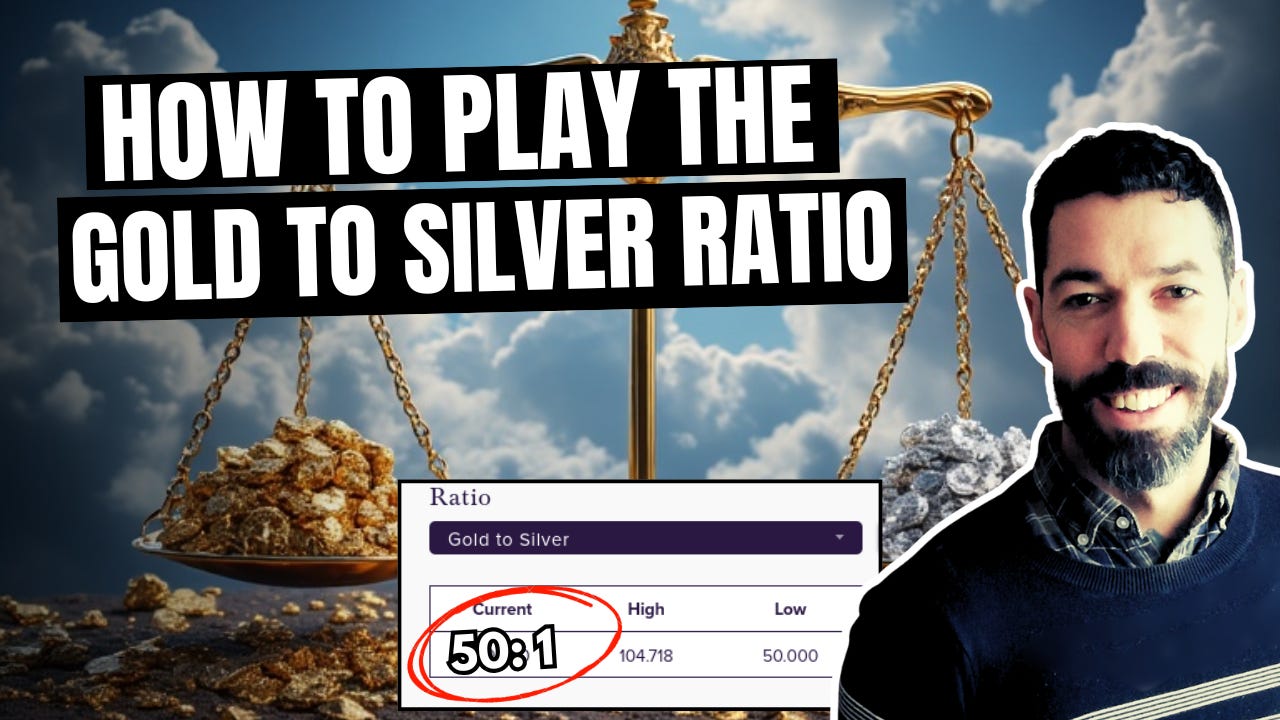
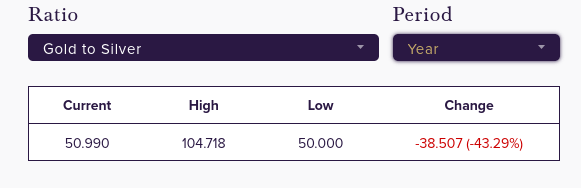
Last week, the gold-to-silver ratio hit 50 for the first time in 12 years. Having fallen 45% in a single year. For me, this marked a long-awaited moment—the day I could finally trade out of silver and into gold in my tactical metals portfolio. For me, 50 represents the lower bound of the channel myself and some of my coaching clients use as a signal when it’s time to flip from silver to gold.
I’ve discussed ratio trading before, and I wanted to mention it again because it is a complete no-brainer strategy. Anyone who believes in precious metals over the long run should seriously consider trading the gold-to-silver ratio. All the clients I work with use ratio strategies in their portfolios because, put simply, there is no easier or lower-risk way to grow wealth over your lifetime than learning how to use ratios properly. It can turn a modest amount of capital, into a great amount of capital, with little effort.
You can trade ratios between many different assets, as all assets move relative to one another, but trading the gold-to-silver ratio is by far my favourite way to do this. Mostly because it doesn’t require me to own something I don’t actually want for a long period of time. I like gold. I like silver. I want to hold both going into the reset—which is important when trading ratios for decades at a time. Yes, I said decades!
For the uninitiated, the gold-to-silver ratio simply tells us how many ounces of silver it takes to buy an ounce of gold, at any given time. There is a natural ratio—based on how much silver comes out of the ground relative to gold—which is around 15 ounces of silver to 1 ounce of gold. Then there is the synthetic, unnatural ratio, which we see in the fiat system, where all manner of distortions can bounce the ratio anywhere between 15 to 1 at the low end—to 120 to 1 at the high end. Trading the ratios is a way of exploiting these fluctuations for our benefit.
Whilst many people see gold and silver as interchangeable, it’s not actually the case. Both gold and silver have unique characteristics, and it is these characteristics that ensure cyclical fluctuations in their relative prices. Gold is clearly the better long-term performer. It has lower volatility and far more durable demand due to its monetary nature. The last few years have shown how the more the financial system decays, the more capital will flee out of sovereign debt and paper assets, and into gold. Central banks and wealthy families will buy gold irrespective if price. This gives gold a persistent source of demand—especially as we move deeper into the fiat endgame. Eventually, the system will be reset versus gold.
For this reason, gold should always be the base of any wealth preservation portfolio.
Silver, on the other hand, is primarily an industrial metal in the modern era. Not entirely—many of us still see it as money—but unlike gold, industry remains its largest source of demand. This exposure makes silver far more sensitive to the commodity cycle and economic downturns. Which is actually one reason there’s such effort to keep its price suppressed: it’s a crucial input for too many industries. Historically, this exposure to industry has caused silver to lag behind gold for long periods, only to suddenly surge and outperform for a time. Because the silver market is relatively small, so it doesn’t take much increased demand to move the price violently.
We saw this in 2025. After badly under-performing gold from 2000 onwards, silver suddenly surged over 200% in a single year when the physical market suddenly tightened. This kind of sudden wild move is not alien to silver. It has happened multiple times in the past. In terms of the ratio strategy it can dramatically alter the relative value between the two metals—at least temporarily. The problem, of course, is that silver’s upside volatility also exists on the downside. During the 2008 Global Financial Crisis, for example, silver was one of the worst-performing assets, falling roughly 60% in a short period of time.
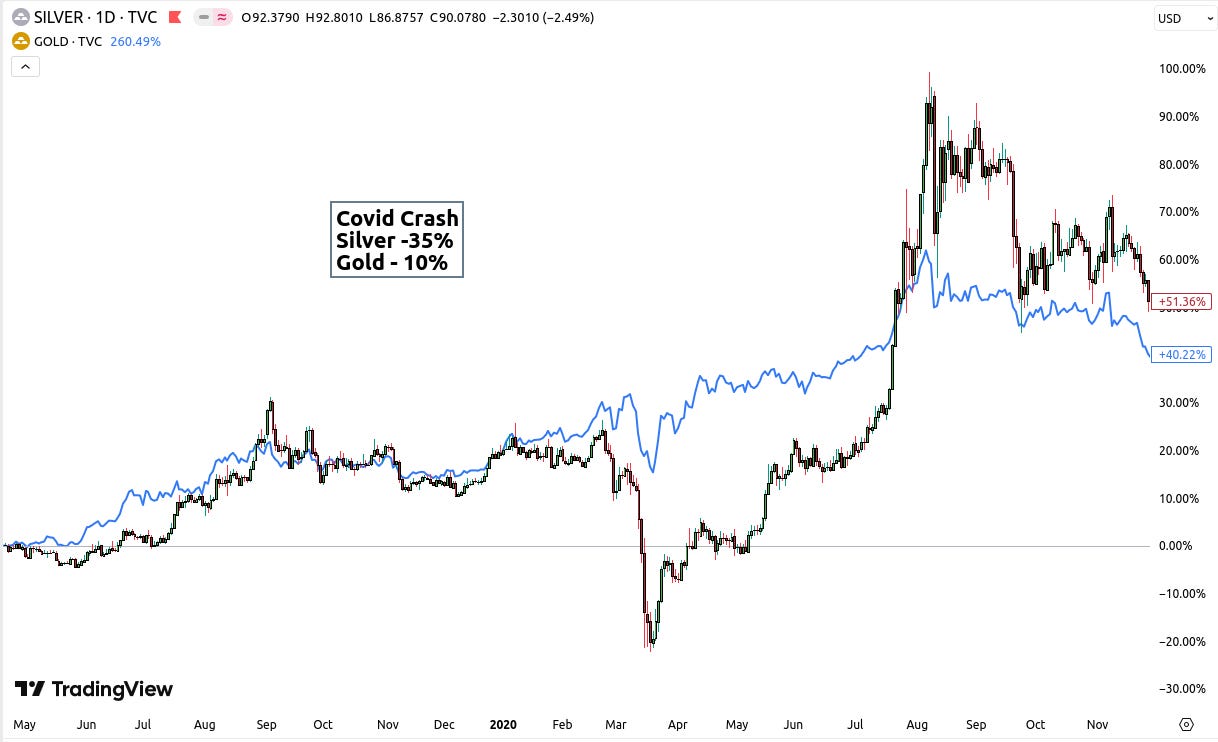
In the 2020 COVID crash, it dropped around 35% in just a few weeks, bottoming near $12 per ounce. That was actually the last time I bought silver—vaulted, not physical—given you couldn’t find the physical at anywhere near the on-screen price. I have been using that silver to trade the ratios ever since.
For those holding silver in a static position, the volatility and laggy performance can be difficult to endure over the long term. But for those trading the ratios, that same volatility isn’t a problem—in fact, it’s desirable. It’s the wild swings in silver that helps create spikes and crashes in the gold-to-silver ratio that we rely on. In the 2008 GFC the ratio dropped from over 80 to close to 30 in a matter of months. Whilst it decimated the silver price, for those of us trading the ratios, that’s exactly the kind of scenario we hope for. Because each time we trade from one metal to the other, we increase our wealth—for free. The only real costs are the storage fees for vaulted metals and the spread between selling one metal and buying the other, which are typically low, usually just a few percent.
Personally, I do not recommend playing this strategy with physical metals, because silver premiums and the buy-sell spreads are simply too high. It would erode the strategy substantially. For this reason, it doesn’t work efficiently. Vaulted metals, however, allow you to buy silver very close to spot, making them ideal for ratio trading. Whilst there is some counterparty risk, by choosing a good vault you can maintain full legal title over your holdings.
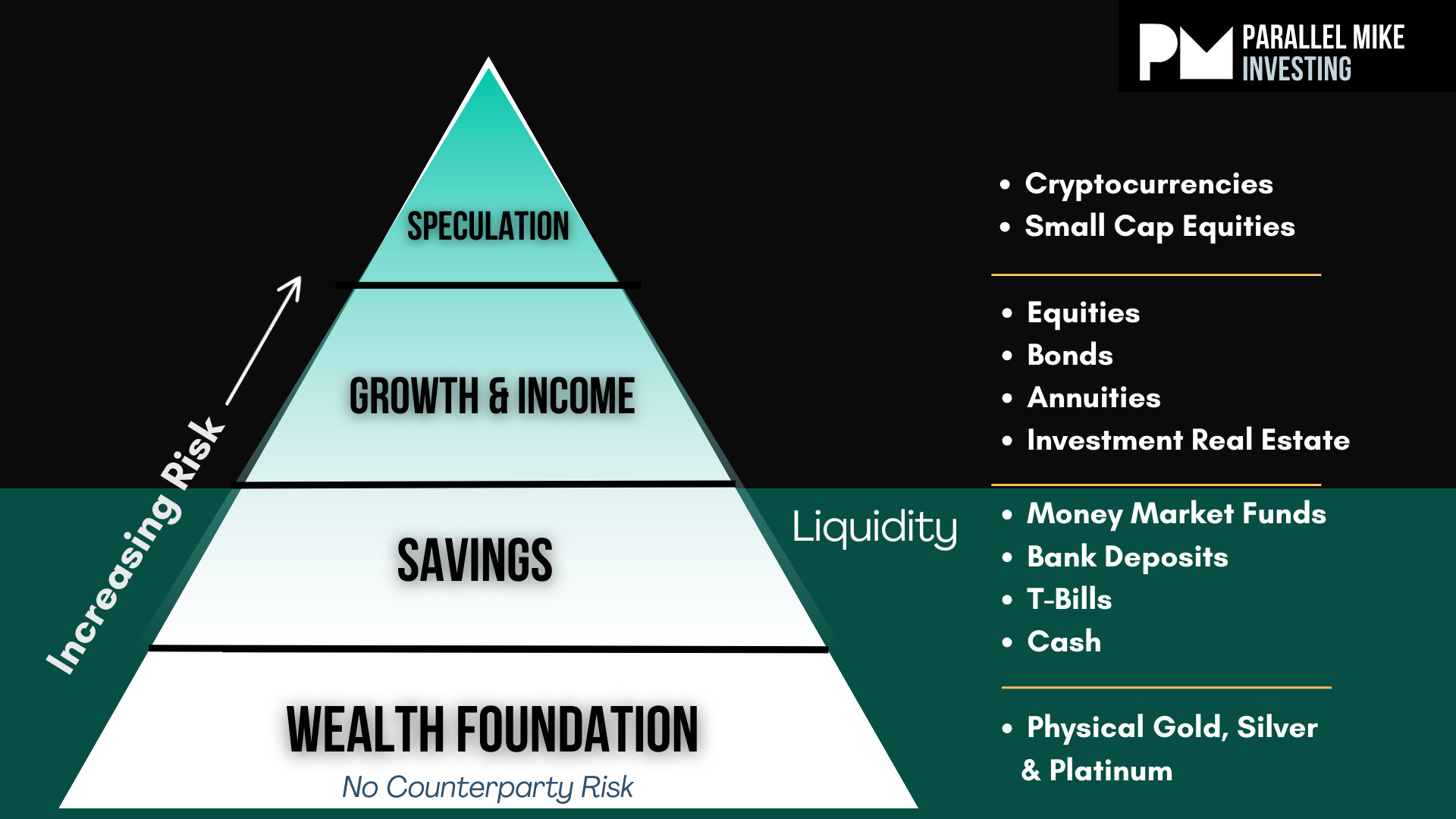
Of course, this strategy should not involve your entire metals portfolio. You should always maintain a solid foundation in physical metals, with core holdings in both gold and silver. Alongside that, you can run a separate vaulted portfolio—which I call a tactical metals portfolio—specifically for trading the ratio. This might represent 5–10% of your total holdings. While it’s only a small allocation, it can be extremely powerful when used consistently over many years. In the following article, I’m going to show you how I use the ratio, and tel you about the impact it has had on some of the people I have supported to implement it.