
Why Bitcoin Is The Scariest Asset To Hold This Halloween
An Honest Look At The Bitcoin Narrative & Why It's Definitely Not 'Digital Gold'


Every financial bubble and con game comes with its own propaganda. In the 1920s, it was newspaper articles convincing everyday people to buy stocks on margin. Many who took the bait later lost their homes or family farms when the crash was inevitably triggered. In the late 1990s, it was TV financial pundits proclaiming the dawn of a “new economy,” where earnings no longer mattered and prices could only go higher because… “Internet!” We all know how that ended.

Today, it’s a never-ending stream of claims that Bitcoin is superior to gold, how it’s digital real estate, the hardest money ever created, a never-ending fountain of wealth… and has zero risk. Hmm. I recognize that smell, distinctly bovine, wafting from the annals of history. Or anus of history, as the case may be.
It’s a seductive narrative—especially for those who don’t know their financial history. Of course, some of the biggest BTC peddlers actually do know it, but they ignore it because they’re riding aboard the BTC gravy train. I’ve watched many people I once considered level-headed analysts suddenly become borderline hysterical about Bitcoin. I am always dubious about it, chiefly due to the financial incentives they suddenly receive for doing so: guest appearances all around the world at fancy Bitcoin conferences, followed by book deals. Because that’s just what the world needs… another book pumping Bitcoin.
Essentially, they’re being paid to turn themselves into tools of propaganda, pushing the very same “this time is different” line they once mocked others for repeating. But from my perspective, Bitcoin is following a very familiar, predictable pattern of rise—and inevitable fall—that won’t end with the utopian outcome these shills are promising. Stripped of the lies, a much more realistic picture emerges: we’re not dealing with digital gold—we’re dealing with the next evolution of FIAT. The propaganda is required to obscure this truth and fool you. Trick or treat.
To be clear: this isn’t an anti-Bitcoin piece. I don’t hate Bitcoin—but that’s not to say I like it either. I’ve said before that the Bitcoin “community” behaves more like a quasi-religious sex cult (only without the sex). Dissent from the narrative or asking tough questions is simply not tolerated. For anyone who has ever studied cults, the telltale signs of psychological manipulation are easy to spot:
“Bitcoin is Hope”
“Have Fun Staying Poor”
“You Can’t Beat Math.”
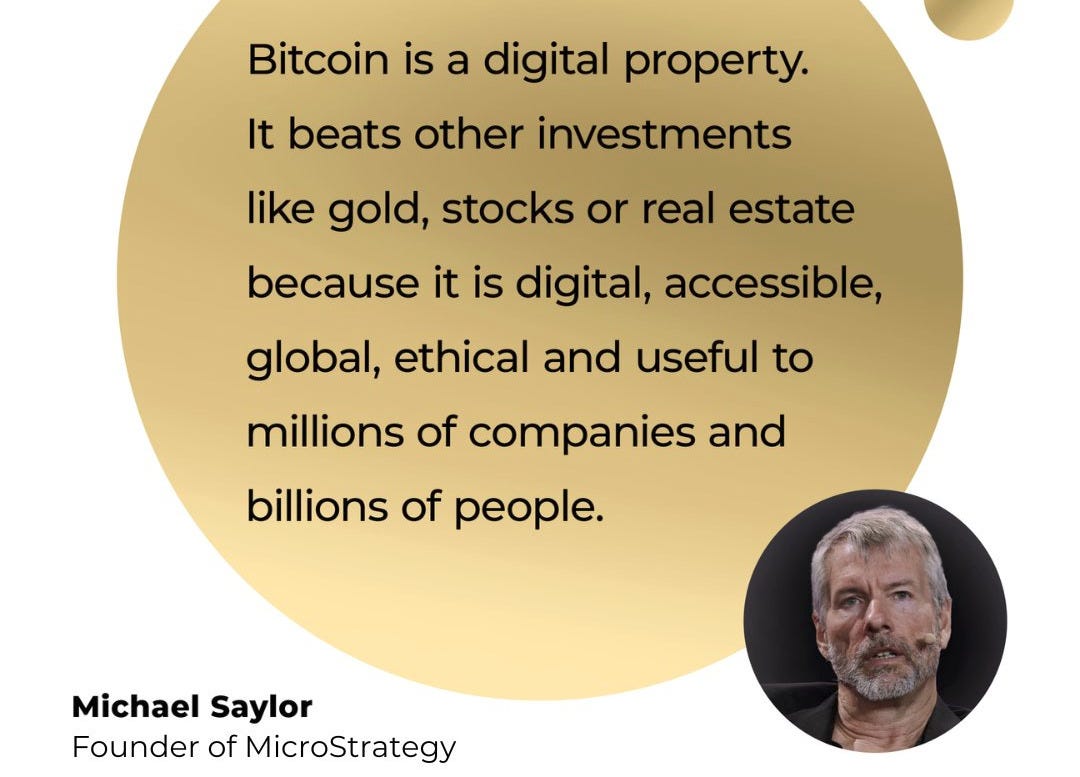
Any movement that encourages cognitive bias and suppresses critical thought to this degree is something you ought to avoid like the plague. That’s why I wanted to write this piece: to share my honest perspective as someone who’s studied technology cycles, financial history, and propaganda—so we can see where we are being lied to. Whether you own some or not, I hope this serves as a clear-eyed look at the deception in play—especially the claim that Bitcoin is equal to or superior to gold. Yes, Bitcoin has been an amazing speculation—but a safe haven? It isn’t even an investment.
Let’s take a look.
Speculation vs. Investment
For most of its life, Bitcoin has been a speculation, not an investment—and certainly it has never been, and never will be, a wealth preserver. These are three distinct categories, and conflating one with another is a time-tested way of deceiving retail investors. An investment is an asset whose long-term value can be ascertained by looking at identifiable economic drivers—such as cash flows, productive utility, or intrinsic demand—and whose expected return is not dependent on finding a greater fool. A safe haven protects capital. Bitcoin does neither, so it must be judged solely as a speculation, and speculations depend almost entirely on sentiment.
The major difference between a speculation and an investment for the buyer is the level of risk they’re taking on by owning the asset, compared to the level of reward they can expect if the asset succeeds. Speculations are inherently risky. That’s the point. They offer higher potential returns than traditional investments like blue-chip stocks or government bonds, but in exchange for those potentially higher returns, you’re taking on much more risk.
This typically shows up in two ways: higher volatility—meaning bigger spikes up and sharper crashes down—and a greater chance of losing some or all of your capital. Bitcoin, one of the most volatile assets in the world, has certainly lived up to that description. And while it hasn’t lost 100% of its value (yet), and has delivered great returns if measured from its inception, along the way it has suffered routine drops between 50% to 90%. This is normal for a high-risk speculation, but not for an investment.
Comparing the returns of a higher-risk speculation to a lower-risk investment is clearly disingenuous. Categorization matters, and in the case of Bitcoin, proponents are abstracting reward from risk. A solid portfolio requires a balance of risk and reward if you want to succeed over the long term. Pursuing only the largest returns with no view to risk management is not something that can be sustained through the entire liquidity cycle. Right now, we are entering a period where return of capital matters more than return on capital, so the Bitcoin narrative depends on convincing people of an un-truth: that it is a low-risk asset. By doing so, proponents can compare it to inherently safer asset classes like gold, which naturally produce lower returns, and claim, “See? Bitcoin is superior!” Obscuring the fact that gold is not meant to produce speculative like returns—it’s meant to protect capital. Which it has done for 5000 years.
Armed with this knowledge, it’s easier to see why the Bitcoin narrative as delivered by the cult is not what it appears. Yes, it has delivered impressive returns in the past. But the reason it soared so dramatically between 2010 and 2020 is that it was a high-risk speculation that happened to succeed. For most of that period, it was a bet that could have easily failed. Outcomes tell us only what did happen, not the many things that could have happened. A man can play Russian roulette with a loaded gun and survive. Perhaps he could do it ten times in a row and live to tell the tale. But just because the outcome was favorable doesn’t mean the risk wasn’t extreme. It’s the same with investing. Judging Bitcoin’s success today without considering the many less favorable outcomes that didn’t happen—but easily could have—is a mistake.
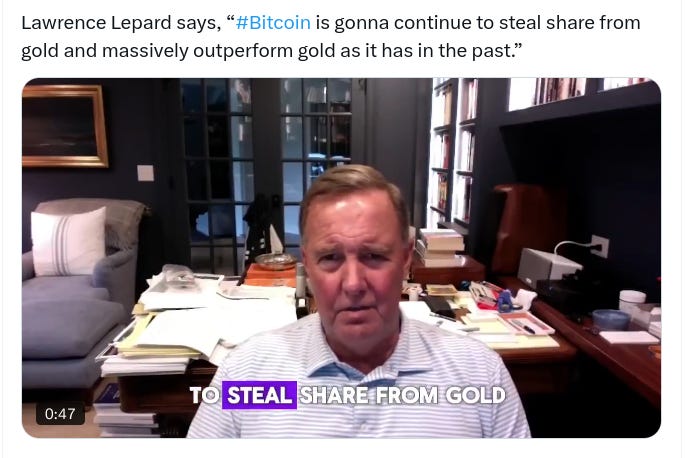
Comparing Apples to Apples
If we want an honest view of the Bitcoin narrative, we first need to place its 2010–2020 returns in the proper context. Bitcoin has followed a fairly typical life cycle, one that isn’t as unique as its promoters insist. Plenty of penny stocks, junior miners, and tech start-ups have seen similarly explosive gains during their speculative years, only to fade away, collapse entirely, or drift into irrelevance further down the road. But even those which survive don't continue to deliver their outsized early gains forever—they flatten out as the overall risk dimishes.
Take Amazon. Buying shares in 1998, when it was just a scrappy online bookseller, was not the same risk proposition as owning it in 2020, when it had become a global e-commerce titan. Early investors faced substantial risks—the company could easily have gone the way of Pets.com or any number of dot-com casualties. Profits were not there. Early investors were speculating on an unknowable future. This is why Amazon’s stock rose roughly 98,000% from inception to today. Tesla tells a similar story, up more than 20,000% in under 14 years. So why don’t Bitcoin advocates compare Bitcoin’s returns to Amazon or Tesla? Because that would be comparing apples to apples—and it would undermine the propaganda.
Are they just naive, or are they intentionally misleading us? I think it’s the latter. If you look at how the Bitcoin community censored Roger Ver’s book Hijacking Bitcoin: The Hidden History of BTC, it’s obvious the space is actively seeking to obscure the true risk profile of BTC and create obedient lemmings rather than smart investors. Roger, as an early Bitcoin adopter and serial Bitcoin entrepreneur, is certainly not a hater. He was one of the earliest entrants and eventually made billions from his holdings. So when he says Bitcoin has been hijacked, the community should be all ears. That they decided to censor him instead tells you everything you need to know about their credibility.
They threw the censorship and the propaganda. They’ve literally hijacked Bitcoin and I literally wrote an entire book about it. You can find Hijacking Bitcoin on Amazon and everywhere else. And lo and behold, just a couple of weeks after the book… I get arrested. And now I’m facing 109 years in federal prison for having exposed the way in which Bitcoin was hijacked.
— Roger Ver
But It’s Digital Gold!
Bitcoin being called “digital gold” is an oxymoron. Gold’s value comes from being a physical, immutable element of nature, while anything digital relies on human-made systems—electricity, networks, encryption, hardware—that can fail, change, or become obsolete. Gold is permanent; digital assets are fragile. So let’s take a closer look at the claim that Bitcoin is a safe haven akin to gold—a rare asset class, given few assets can live up to the definition.
safe haven
noun
A place of safety or refuge.
A protected zone in a country, especially one designated for members of an ethnic or religious minority.
An investment that would lose little of its value in the event of a stock market crash.
An investment that would lose little of its value in the event of a stock market crash. That certainly isn’t Bitcoin. The other week, when the NASDAQ fell 3.5%, Bitcoin fell 13%. Why? Because it’s a leveraged play on a highly leveraged part of the stock market: tech. Meanwhile, gold was up for the day—a classic rush out of risk and into safety.
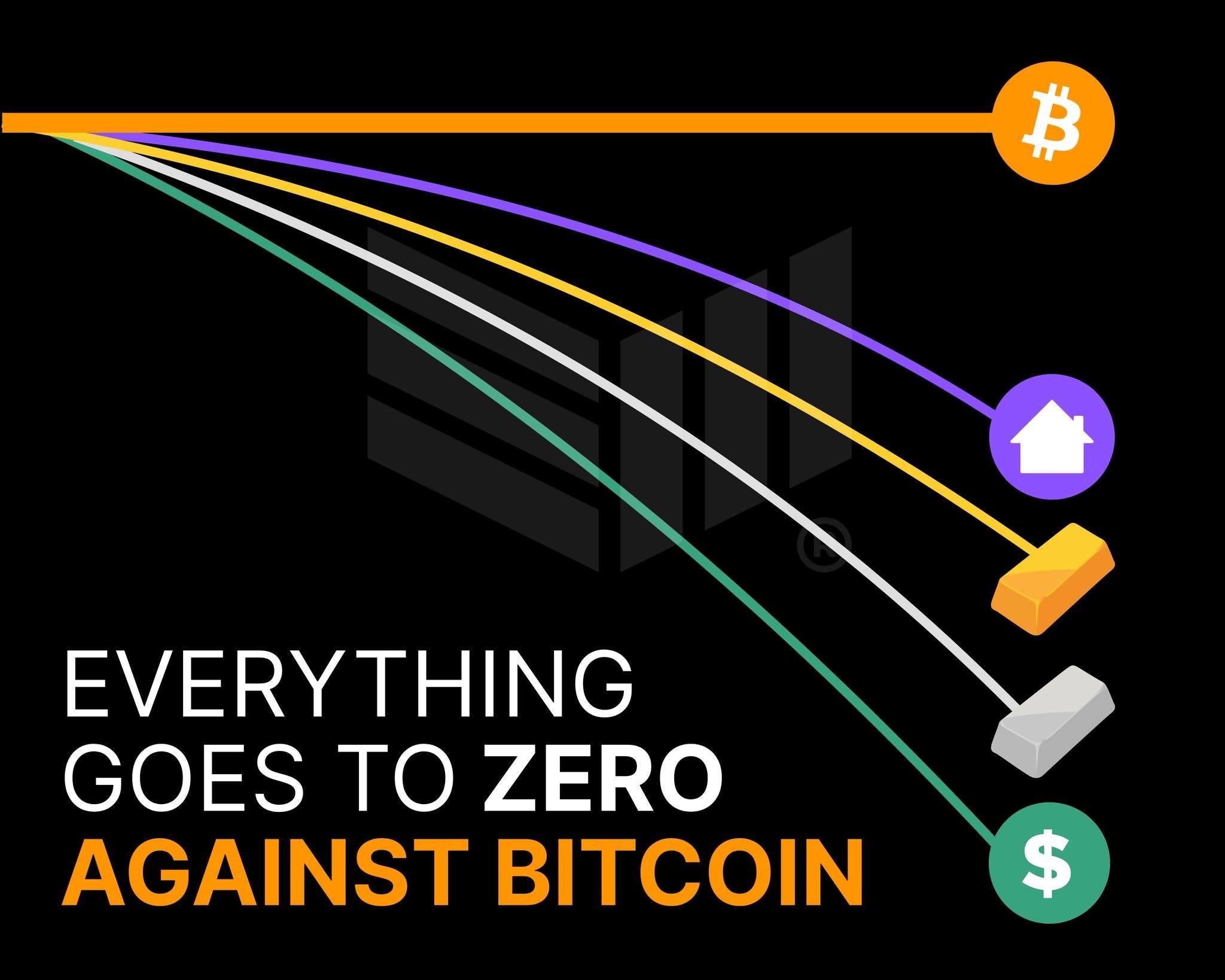
Let’s go back further, to the COVID crash. How safe was Bitcoin then? It collapsed 50% in a matter of days. Meanwhile, gold was the best performing asset in the crash. Safe haven they say? Bitcoin is no safe haven. It’s not even a proper investment. It’s a speculation — a bet that more people will want to own it in the future, than they do today. And the only way that narrative can continue is for the U.S. government and deep state to instruct more and more of their proxies to jump in, and pay the media and pundits to repeat the lie that it’s going mainstream and replacing gold!
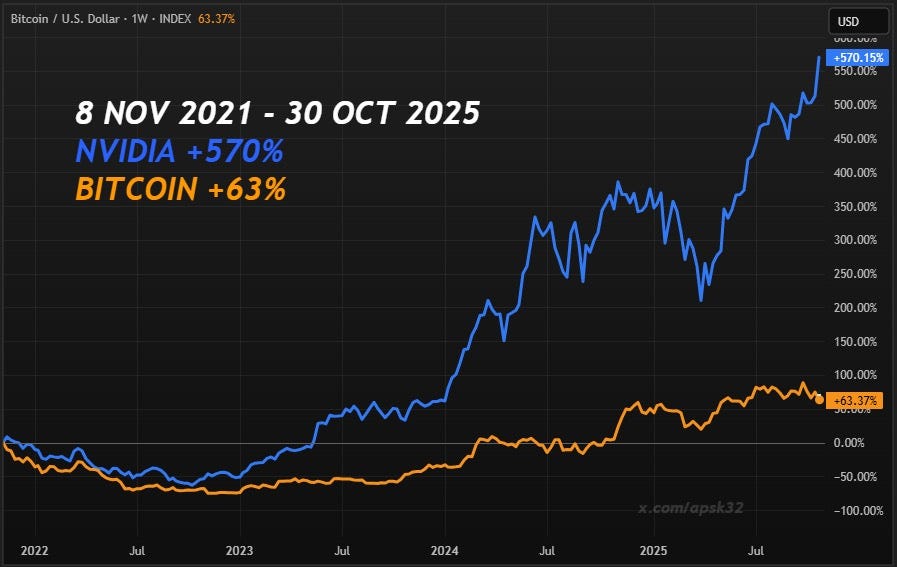
Clearly, it isn’t. And worse still, it’s not even a great speculative play on tech anymore. Although the U.S. is trying to push everyone and their granny into it, somehow, the “hardest money ever created” is getting outperformed by its actual peers — tech companies. Since 2020, both Tesla and NVIDIA have left Bitcoin in the dust. And the worst part? Despite lagging them on the upside, Bitcoin still manages to bleed harder on the downside. That is a terrible risk vs reward proposition.
But let’s go one step further. In 2025, even gold — the true safe haven, known for its low volatility — is substantially outperforming Bitcoin, the speculation. And this is happening in a year when the stock market is printing new all-time highs. Which means Bitcoin has now become the worst of all worlds: it falls faster than anything else in a crash, it’s underperforming its tech peers during the rise, and cannot beat the safest, lowest-risk asset on earth. At that point, you really have to ask yourself: why own it at all? Answers on a postcard to Blackrock and Trump.
Of course, things get worse when you realize that the tech sector itself is in a massive bubble. The Shiller PE ratio and the Buffett Indicator are both posting record highs. NVIDIA alone is now valued at roughly 16% of U.S. GDP. It’s insane. Make no mistake — a huge fall is coming. And given Bitcoin is basically “tech squared,” when the AI and tech bubble finally pop, there is only one outcome: massive wealth destruction for Bitcoin holders.
I wish that weren’t the case, because I know people heavily invested in the narrative. But the jury is no longer out. We have already witnessed multiple stress tests and seen how Bitcoin performs in real-world scenarios. Hence the need for insane levels of narrative and propaganda to keep the wheels turning.
Bitcoin The Tamagotchi
Ok, so it’s obvious those who claim Bitcoin is equal or superior to gold are lying to us. It isn’t a safe haven. It isn’t a store of value. It isn’t digital real estate. So what actually is it? Well, I’d say it sits in the most fragile category imaginable: a speculative asset built entirely on man-made technology. And any honest look at financial history shows that tech-based assets—no matter how revolutionary they seem at first—have short lifespans. That’s why I’m writing this on a modern laptop, not a typewriter or a computer running Windows 95. Even so, this laptop will be effectively obsolete within a few years. And compared to the technology the elites have access to, it’s probably already twenty years behind.
Scamsters like Michael Saylor—or anyone in the Bitcoin cult insisting Bitcoin will hold meaningful value fifty years from now—are deceiving us. Saylor in particular is a technologist; he’s written extensively about how fast digital systems move, so he fully understands what long-term obsolescence looks like. This isn’t hard to see, because the technology cycle itself is well established. Early investors make their fortunes, cheap capital pours in to build out the infrastructure, and the pioneering assets that sparked the movement gradually lose their relevance. Eventually, the bubble that forms around them bursts — and that’s when the elites swoop in, consolidate control, and repurpose the underlying infrastructure for their own aims (stablecoins, anyone?).
From there, the original assets that defined the technology begin to shed their speculative shine and settle into mediocrity. They become… just another investment. Or worse, they fade into relics of a bygone era — remembered fondly or with disgust, depending on how the story ends.
In the late 19th century, the railroad boom turned Pennsylvania Railroad into the most celebrated and widely held stock in America—gone by the 20th century. Those who went all in, were wiped out. During the early automobile revolution and the roaring 20’s, dozens of automakers dominated the Dow—today, all but Ford have vanished. Those who went all in on them, and believed they’d be around for centuries, were wiped out. Then came the dot-com boom: Pets.com, Webvan, Boo.com—poster children of the internet revolution—collapsed spectacularly. Even Cisco Systems, the most valuable company on the planet going into the 2000 dot-come crash couldn’t hold out during the sell off. Somewhat similar to Bitcoin, its stock skyrocketed from $2 to over $80 between 1995 and 2000, only to fall 89% by 2002.
Right now Bitcoin in 2025 is roughly the same age Cisco was in 1999—and like Cisco back then, the underlying technology is already approaching retirement. But unlike Cisco, Bitcoin has no profits, no revenues, no business to fall back on. Cisco survived the dot-com crash because it could pivot, evolve, and create new products. Bitcoin cannot. It cannot adapt, innovate, or improve its core protocol. It is frozen in time—locked to a tiny block size and secured by decades-old encryption. That’s why it’s already clunky, expensive, and slow, even outside moments of panic. Its relevance depends entirely on the narrative that it is a permanent store of value. Once that story collapses, Bitcoin collapses with it. And now you know why they need to keep building the hype and selling us lies. The more shills who join the club, the better!
It’s also why the powers-that-shouldn’t-be are happy for you to own it. The idea that they “couldn’t stop it” and that you’ll somehow keep it safe in a cold wallet even while they openly embrace it is, frankly, dumb. Bitcoin exists on the blockchain, the only thing you have in a cold wallet is your key. If they can usurp the encryption, it’s gone. And while I’ve never been against Bitcoin as a speculation, I think in another 20 years it will have gone the way of the Tamagotchi—the little digital pet that, for a moment, was the most desired toy on earth. I remember queuing for hours before the store opened just to buy one. The world lost its mind for a minute. Thank God we didn’t invest our life savings into them—or railroad stocks in the 1850s, or Cisco in 2000.

Clearly understanding cycles of technology, and asset classifications, is key to unlocking the truth about Bitcoin. Gold being immune to innovation cycles, immune to political lies, immune to human error—is precisely the reason why central banks and the wealthiest families on earth stick with it. They know it doesn’t rely on fragile systems. It won’t be destroyed by solar flares, cyberattacks, quantum computers, or the sudden release of millions of tokens by mystery man Satoshi. They also know that when all else fails, gold doesn’t.
The fact that these people are so desperate to brand it as “digital gold” is subversion of the highest order. But Bitcoin is not digital gold—it is FIAT on steroids. The opposite end of the monetary spectrum from gold. It represents nothing of tangible value. Not even a piece of paper. It also has substantial counterparty risk given it’s dependence on centralized systems. Essentially, it is the “you will own nothing and be happy” version of money. And when the Tether CEO recently claimed gold is the “natural Bitcoin,” he was mocking us. Jerome Powell repeated the same lie this week. So again, we should ask: why do they want us to buy Bitcoin so badly? Are they acting in our best interests, or are we being led off of a cliff edge? For further thoughts on this check out my previous article discussing the emerging Mark of The Beast system.
Closing Thoughts
With Bitcoin up only 15% in 2025, compared to gold’s >50%, it’s obvious even to the most casual investor that these two assets are fundamentally different. One preserves wealth; the other is a gamble, designed purely to grow it. Now consider what it means when the wealth preserver is outperforming the high-risk speculation—even as bubble assets are still rising. It’s an extremely bad sign, suggesting that despite all the hype, propaganda, and big-name endorsements, the scam could be nearing its end. For this reason, Bitcoin could well be the scariest asset to own. Bereft of the narrative, it’s become nothing more than a tool of the dollar system.
Around 90% of Bitcoin purchases are made using stablecoins, whose issuers hold reserves in U.S. Treasuries. When Bitcoin falls and people cash out, they move into these “fake dollars,” which can be erased by the issuers. The Treasuries remain untouched — for now. But imagine a run on stablecoins. This would result in the companies having to quickly liquidate obscene amounts of Treasuries, a doomsday scenario in and of itself. I’d expect that if this were to occur, the doors would be slammed shut instantly, leaving everyone — Bitcoin and stablecoin holders alike — stranded at sea. Maybe that’s the point: it would inflict ruinous losses on anyone trapped in Bitcoin during the next crisis, whether because of the stablecoin situation, the collapse of the everything bubble, or a sudden revelation of its origins or security flaw.
In any case, when the endgame arrives, I expect the public’s wealth will be wiped out, leaving them desperate and compliant, just in time for their entry into the digital panopticon. Meanwhile, gold will continue to preserve real value for the small few who hold it. So there it is — rant over. Hopefully, it was enjoyable to read. And if I’ve offended any die-hard Bitcoiners, forgive me, but you should welcome my skepticism. You won’t hear it from the Bitcoin community itself. Just remember: whether it’s gold, Bitcoin, or any other asset, confirmation bias is the enemy. You want to hear the strongest arguments against your position. And it’s fair to say few are more skeptical of the mainstream Bitcoin narrative than I am.
So if you’ve read this and still decide to HODL the code, fair play — at least you’ve heard the other side. Of course, I would much prefer you come to recognize it as a speculation, get rich, and get out in time to ride off into the sunset on a golden chariot. Let Michael Saylor HODL, and go down with his stinking, filthy ship. You deserve better than that.
Now, having guaranteed my invite to Bitcoin Costa Rica was just thrown in the fire—I’ll sign off. Guess they’ll be no handsome appearance fee or book deal for me.
Ah well. Back to the veg patch I go!
Great research Mike thank you. I asked a successful investor I know if he understood Bitcoin he said no then added he owned a relatively small amount for convenience purposes to pay for things. In other words he doesn’t trust it.
On the other side it’s puzzling how super successful investors like Doug Casey are so supportive. From a recent newsletter of his: “Things happening in places like El Salvador—where Bitcoin is a national currency—give me hope….One important thing is to become crypto- and Bitcoin-competent, so that you don’t have to use the corrupt and controlled conventional system and the dollar.”
It's pure speculation. Next to know 'real world' application despite being around since 2009. Says it all really like all these shit-coins.